

Table of Contents
- What Separates Supportive Sports Bras for Large Busts From the Rest
- Why High-Impact Sports Bras for Large Breasts Need a Different Design
- The Best Running Bras for Large Breasts: Bounce Reduction and Motion Control
- Sports Bras for DD+ Cups: Sizing, Coverage, and What to Ignore
- Sports Bra Fitting Tips for Large Breasts: How to Measure at Home
- When Support Fades: How Bra Aging Affects Fit and What to Do About It
- Conclusion: Choosing a Sports Bra That Actually Works for Your Bust
- Frequently Asked Questions
Last Updated: October 16, 2026
What Separates Supportive Sports Bras for Large Busts From the Rest
Supportive sports bras for large busts control motion through structure, not pressure: separate cups or a layered front, a firm band, and straps that spread weight across the shoulders.
A bra that feels fine during a warm-up can turn into a shoulder-pain machine by mile two. Below: what to check in a fitting room, which design features reduce bounce, and why some rave-reviewed bras fall apart for DD+ cups.
Here's what most guides get wrong: they treat support as a single feature. The Cleveland Clinic overview of breast pain and support notes that poorly fitted bras are a common contributor to neck, shoulder, and back discomfort, which lines up with what we hear from customers every week.
Compression vs. Encapsulation Support
Encapsulation means each breast sits in its own cup or compartment, so it's supported individually. Compression means fabric presses the breasts flat against the chest to limit movement.
For larger busts, encapsulation usually wins. Compression alone flattens tissue without stopping vertical bounce and often creates a sweat-trapping uniboob. The strongest designs combine both.
Band Stability and Cup Separation
The band does the heavy lifting. A band that rides up is too loose, and everything above it suffers. Cup separation keeps breasts from pressing together, reducing chafing and sweat.
When you try a bra on, jump in place. If the band lifts off your ribs, size down in the band. If the cups collapse or gap, the shape is wrong for you, not the size.
Why High-Impact Sports Bras for Large Breasts Need a Different Design
High-impact sports bras for large breasts need wider straps, a taller band, and more structured fabric because breast motion multiplies with cup size. A C-cup jog produces modest movement; an H-cup jog sends far more force through the same shoulders and spine.
That's why a bra that works for a B-cup runner can be painful at a G-cup: the design must manage load, not just coverage.
The Biomechanics of Bounce
Breasts have no muscle. They're supported by skin and the Cooper's ligaments, which stretch and don't snap back. No bra reverses that, its job is to limit how far tissue travels.
Motion happens in three directions at once:
- Vertical, the up-and-down slap of every footfall, which is the biggest driver of discomfort
- Lateral, side-to-side sway that pulls straps off the shoulder
- Front-to-back, the forward throw and rebound that causes chafing under the band
A bra that controls only one axis leaves the other two unmanaged. That's why compression-only designs feel secure in the mirror but still bounce on a run.
Match the Bra to the Impact Level
Impact isn't a marketing word, it's a category, and the right bra depends on which one your activity falls into.
| Impact Level | Example Activities | What the Bra Needs |
|---|---|---|
| Low | Yoga, walking, strength training | Light compression, breathable fabric, minimal structure |
| Medium | Cycling, hiking, elliptical | Encapsulation cups, adjustable straps, moderate band |
| High | Running, HIIT, plyometrics, horseback riding | Encapsulation plus compression, wide padded straps, firm multi-hook band, locked-in cup separation |
For DD+ cups, most everyday training lands in the medium-to-high range even when the activity is labeled low-impact, because the mass being moved is larger. A brisk walk in an H-cup displaces more tissue than a jog in a B-cup.
Build Details That Actually Do the Work
Look for these build details:
- Wide, padded straps that distribute pressure instead of cutting in
- A band that's at least two to three fingers deep at the side
- Hook-and-eye closure with at least three columns for fine-tuning tightness as the band relaxes
- Breathable mesh panels placed under the bust and between the cups, where sweat concentrates
- Four-way stretch fabric that recovers its shape instead of stretching out
- Flatlock or bonded seams along the band and strap edges to prevent chafing over distance
- A racerback or lowered Y-back that pulls straps inward so they can't slide off the shoulder
The American Council on Exercise guidance on sports bra selection makes the same point from the training side: the right support level depends on impact, and high-impact activity demands a bra built for it.
Why This Matters More as Cup Size Increases
As cup size goes up, the load on the band and straps grows faster than the load on the cups. The band, not the cup, does the heavy lifting: a shallow cup on a firm band outperforms a deep cup on a loose band every time.
That's why shoulder grooves, neck tension, and upper-back fatigue show up first in large-busted athletes: the straps are compensating for a band that isn't holding. Fix the band and the shoulder pain usually follows.
The Best Running Bras for Large Breasts: Bounce Reduction and Motion Control
The best running bras for large breasts reduce bounce through encapsulation, firm band stability, and straps that stay put, not through squeezing harder.
Motion control comes from cup structure, band grip, and strap placement working together.
Chafing prevention is the quiet second job. Seams under the band or along the strap edge rub raw over distance, so flat seams and soft edging matter as much as support level.
Sports Bras for DD+ Cups: Sizing, Coverage, and What to Ignore
Sports bras for DD+ cups should be sized by band and bust measurement together, not a generic small-to-XL scale. Letter sizing assumes a fixed bust-to-band ratio that stops holding past a D cup.
What to ignore: marketing claims about "one size fits most," vague "high support" labels with no structure behind them, and any bra that only comes in S/M/L. What to check instead:
No-Cup Triple-Layer Sports Bra - The Betty →
- Does the brand publish a real band-and-cup size chart?
- Is there a hook-and-eye closure, or is it pullover only?
- Are the cups separate, or is it one compressed front panel?
- Does the listing show the bra on a range of body types?
Full-coverage design isn't about modesty, it's about keeping tissue inside the cup during movement, which prevents both bounce and chafing.
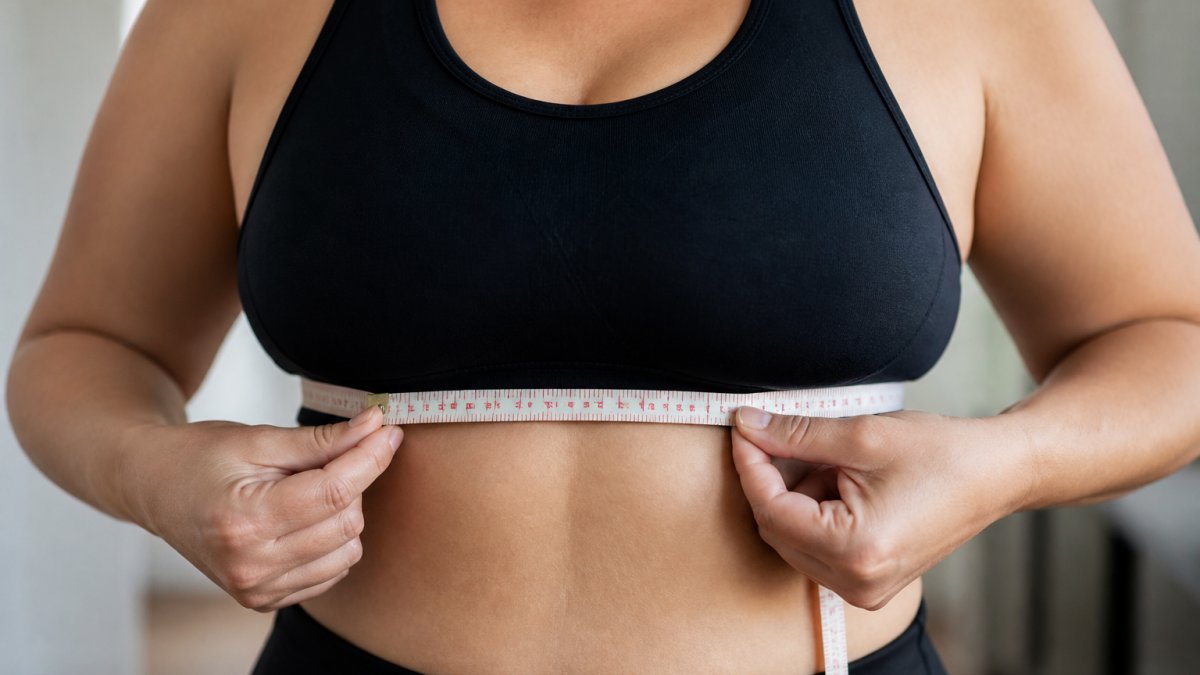
A Visual Guide to Measuring at Home for a Sports Bra
Most size charts tell you what number to look for, not how to get it right.
Here's the sequence we walk customers through.
Step 1, Measure the underbust. Wrap a soft tape around your ribcage, directly under your bust, keeping it level.
Step 3, Subtract to find the cup. Subtract the underbust from the bust measurement.
Step 4, Round the band. Round the underbust to the nearest even number for your band size.
Test the Fit With Movement, Not a Mirror
A static mirror check tells you almost nothing about performance. Run these three tests after you put the bra on:
- Arm raise. Lift both arms overhead. If the band lifts off your ribs, the band is too loose, size down in the band, not the cup.
- Forward bend. Bend at the waist and look down. If tissue spills over the top edge of the cup, the cup is too shallow for you, even if the band fits.
- Jump test. Jump in place for ten seconds. If the band stays put and the cups hold their shape, you've found a fit. If anything shifts, adjust the closure or try a different size.
When to Size Up vs. Size Down
The most common DD+ fitting mistake is sizing up in the band to relieve pressure. That's backwards: a loose band pushes the load onto the straps, which is how shoulder grooves and neck tension start.
Size up in the cup when you see spillover at the top or sides. Size down in the band when it rides up during movement. Adjust one variable at a time so you can tell which change helped.
Sports Bra Fitting Tips for Large Breasts: How to Measure at Home
Sports bra fitting tips for large breasts start with two measurements: your underbust and your fullest bust point.

Here's the sequence we walk customers through:
- Wrap the tape around your ribcage, directly under your bust, and exhale before reading it.
- Measure around the fullest part of your bust, keeping the tape parallel to the floor.
- Subtract the underbust from the bust measurement to get your cup size.
- Round the underbust to the nearest even number for your band size.
- Re-measure on a second day to catch any inconsistency.
Then test the fit with movement, not just a mirror check. Raise your arms overhead. If the band lifts, it's too loose. Bend forward. If you spill over the top, the cup is too shallow.
When Support Fades: How Bra Aging Affects Fit and What to Do About It
Support fades as elastic loses recovery, and the first sign is usually a band that no longer grips.
You'll notice it before you see it: straps need tightening more often, the band rides up during cardio, shoulder pressure returns.
A practical rotation helps: keep two or three bras in active use and alternate them so elastic recovers between wears.
Replace a sports bra when tightening the band to its smallest hook no longer holds it in place.
Conclusion: Choosing a Sports Bra That Actually Works for Your Bust
Finding real support in a large cup size shouldn't require gambling on another online order that arrives too shallow or rides up by week two. At BettynJoan, we build for exactly this problem. The No-Cup Triple-Layer Sports Bra - The Betty uses triple-layer fabric, a lowered Y racer back, wide band sizing, and extended front and side panels to reduce neck tension and hug your ribs without cups or wires.
Get started with BettynJoan and train in a bra that was designed for your bust from the first stitch.
Frequently Asked Questions
What features should I look for in a high-impact sports bra for a large bust?
Focus on wide, padded straps that spread weight across the shoulders, a wide band that sits snug against your ribcage, and full-coverage cups with separation. Look for moisture-wicking performance fabric and a hook-and-eye closure for adjustability. Encapsulation or a compression-encapsulation hybrid reduces bounce better than compression alone. The Betty sports bra, for example, uses triple-layer fabric and extended front and side panels to address these needs without cups.
How should a sports bra fit on a larger chest?
The band should feel snug on the loosest hook, so you can tighten it as the fabric relaxes over time. You should be able to fit two fingers under the band, not a fist. The center gore should rest against your sternum, and the cups should fully contain your breast tissue without spilling or gaping. Straps should not dig in or slide off. If the band rides up when you raise your arms, the size is wrong.
Are encapsulation or compression sports bras better for large breasts?
Encapsulation bras support each breast separately with individual cups, which reduces bounce and keeps shape. Compression bras press the bust flat against the chest, which can work for moderate activity but often causes uniboob and doesn't stop vertical motion as well. For DD+ cups and high-impact sports like running or HIIT, encapsulation or a hybrid design is usually the better choice. Compression alone tends to work better for smaller cup sizes.
How can I reduce bounce when running with a large bust?
Choose a high-impact sports bra with encapsulation cups, wide adjustable straps, and a firm underband. A racerback or Y-back design limits strap movement and adds stability. Make sure the band is tight enough to stay in place without restricting breathing. Replacing worn bras matters too, since elastic loses stretch over time. Layering a compression top over an encapsulation bra can add extra motion control for running.